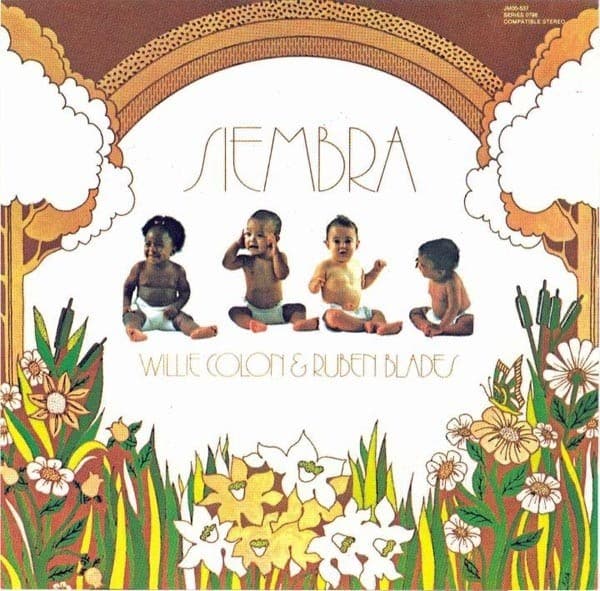
Siembra by Willie Colón & Rubén Blades

Siembra

Willie Colón & Rubén Blades

1978 · Fania · JM-00537

antenna

August 14, 2026 — August 21, 2026

A salsa record built for the dance floor, but full of stories, characters, and social observation. Released by Fania in 1978, Siembra was the second album made together by Willie Colón and Rubén Blades, and went on to become one of the most successful salsa albums ever released. Across Plástico, Buscando Guayaba, Pedro Navaja, María Lionza, Ojos, Dime and Siembra, Blades brings narrative writing and social commentary into songs shaped by Colón’s arrangements and musical direction. Pedro Navaja, in particular, became one of Blades’ defining story-songs, while Plástico opens the album with a direct critique of appearances, status, and consumer culture. The sessions feature Colón on trombone, Blades on vocals, José Torres on piano and Fender Rhodes, Salvador Cuevas and Eddie Rivera on bass, José Mangual Jr. on bongos, Eddie Montalvo on congas, Jimmy Delgado on timbales, and an expanded trombone section. Colón is credited as producer and musical director, with Jerry Masucci and Johnny Pacheco also involved in the album’s production.

Listening with nautnwe + 2 others

About the record
Siembra (transl. "Sow") is the second collaborative studio album by Panamanian singer and songwriter Rubén Blades and Puerto Rican-American singer and Willie Colón as producer. It was released through Fania Records on 7 September 1978. It was the best selling salsa album in the history of salsa music. The album was recorded by Jerry Masucci and Johnny Pacheco at the La Tierra Sound Studios between 1977 and 1978. Background Siembra is the second of five collaborative duo albums produced by Willie Colón. During its time, it was the best-selling salsa record in history. It has sold over three million copies worldwide, and almost all of its songs were hits in various Latin American countries. With its rousing social commentary and unconventional sound, "Siembra" remains one of the most original and influential works in that genre. Blades' " Pedro Navaja ," a song that he fashioned after Bertolt Brecht's "Threepenny Opera," is considered one of this greatest songs. Critical reception John Bush of AllMusic praised the composition of the songs by Blades as well the arrangements by Colón. Bush emphasizes the use of disco arrangements at the beginning of the first track, "Plástico", until Colón's band "slip into a devastating salsa groove". He also praised Blade's vocals, noting his high-tenor voice on "Buscando Guayaba" and tender tones on "Dime". The album was inducted into the Latin Grammy Hall of Fame in 2007. It was listed in the book 1001 Albums You Must Hear Before You Die . In 2024, it was ranked in first position on the “ Los 600 de Latinoamérica ” list compiled by a collective of music journalists, highlighting the top 600 Latin American albums from 1920 to 2022. The album was ranked number one of the 50 greatest salsa albums of all time by Rolling Stone Magazine in October 2024.
Tracklist
A1Plástico6:37
A2Buscando guayaba5:46
A3Pedro Navaja7:25
B1María Lionza5:30
B2Ojos4:52
B3Dime7:00
B4Siembra5:25
Personnel

Adalberto Santiago

background vocals

Al Santiago

maracas

Brian Brake

membranophone

Eddie Montalvo

congas

Eddie Rivera

bass

Jimmy Delgado

timbales

José Mangual Jr.

background vocals, bongos

Jose Rodrigues

trombone

José Torres

piano

Leopoldo Pineda

trombone

Papo Vázquez

trombone

Rubén Blades

background vocals, vocal

Sal Cuevas

bass

Sam Burtis

trombone

Production

Irene Perlicz

design/illustration

J. P. Posse

photography

Jerry Masucci

producer

Jon Fausty

engineer

Willie Colón

background vocals, creative direction, performer, producer, trombone

Conversation

0
U

No comments yet.